Abstract
This study evaluated the impact of border management strategies on illicit trade reduction in Kenya’s one stop border post of Busia. A descriptive research design was used. The target population comprised community members living along the border, law enforcement officers, and relevant government officials such as chiefs and immigration officers, all of whom had valuable information regarding the issue. Purposive sampling was used to select the residents along Kenya-Uganda border and they were 156 in total. Purposive sampling was also used to select law enforcement officers, chiefs, and immigration officials. The questionnaire used was researcher-administered. A structured questionnaire was used to obtain information from the residents while interview schedule guides were used to obtain information from law enforcement officers, chiefs, and immigration officials. Hypotheses were tested using Pearson’s Correlation Coefficient (r) at α =0.05 level of significance. The results obtained from Kenya’s one stop border post of Busia revealed that corruption and weak enforcement mechanisms were the primary factors driving illicit trade along the Kenya-Uganda border. Smuggling routes also played a significant role, facilitating the illegal movement of goods. Additional contributors include cross-border demand, political instability, inadequate infrastructure, and poverty, each exacerbating the problem to varying degrees. Statistical analysis showed the critical role of technological adoption, inter-agency collaboration, and stringent border control measures in mitigating illicit trade. Pearson’s Correlation Coefficients demonstrated strong negative correlations between these variables and illicit trade prevalence, indicating that increased adoption of technology, enhanced inter-agency cooperation, and stricter border inspections significantly reduced illicit trade. Recommendations included implementing robust anti-corruption measures, equipping and training border officials, investing in advanced surveillance technologies, and fostering inter-agency coordination with integrated policies to ensure a comprehensive and unified approach to combating illicit trade.
Keywords
Impact, Border Management Strategies, Illicit Trade Reduction
1. Introduction
Global trade is a cornerstone of economic growth, but it also presents challenges such as illicit trade, which undermines economies and threatens security. In many countries outside Africa, such as the United States, the use of advanced technologies and stringent border management strategies has significantly reduced illicit trade. For example, the U.S. Customs and Border Protection (CBP) employs sophisticated monitoring systems, including non-intrusive inspection technologies and electronic cargo tracking, to detect smuggling activities
. These technologies have enhanced the ability to monitor and control goods crossing the border, curbing activities such as drug trafficking and counterfeit goods trade. Additionally, inter-agency collaboration involving customs, border patrol, and federal law enforcement has streamlined enforcement and compliance, creating a robust framework to address trade-related crimes. Policy integration has also played a pivotal role, aligning national laws with international standards to close gaps that illicit traders could exploit. The success of these approaches in reducing illegal trade has made them models for other nations grappling with similar challenges
| [2] | Von Lampe, K., Kurti, M., & Bae, J. (2014). Land of opportunities: the illicit trade in cigarettes in the United States. Corruption, Greed and Crime-Money: Sleaze and Shady Economy in Europe and Beyond. Oisterwijk, The Netherlands: Wolf Legal Publishers, 267-289. |
[2]
.
In Africa, illicit trade remains a pervasive issue, often fueled by porous borders, weak enforcement mechanisms, and insufficient technological capabilities. South Africa, a regional economic powerhouse, has faced significant challenges with counterfeit goods, smuggled cigarettes, and illegal mining products
. To counter these threats, South Africa has implemented targeted strategies, such as enhancing technological monitoring at border points and forming multi-agency task forces to address illicit trade. The integration of customs systems across Southern African Development Community (SADC) member states has also facilitated better information sharing, making it harder for smugglers to exploit regulatory loopholes. However, the scale of the problem and the adaptability of smugglers highlight the need for continuous improvement in policy, technology, and inter-agency collaboration across the region
.
At the national level, Kenya occupies a strategic position within East Africa, serving as a critical transit hub along the Northern Corridor, a major trade route connecting the port of Mombasa to landlocked countries such as Uganda, Rwanda, and South Sudan
. This strategic location makes Kenya a focal point for both legitimate trade and illicit activities, including smuggling, counterfeit goods, and tax evasion. Illicit trade has been a persistent problem, undermining economic development and posing security risks
. To address these challenges, the Kenyan government has adopted several border management strategies, particularly at One-Stop Border Posts (OSBPs) like the one in Busia. OSBPs aim to enhance the efficiency of border crossings by integrating the operations of two neighboring countries at a single location, thereby reducing time and costs associated with cross-border trade. At the national level, Kenya has implemented technological systems such as the Integrated Customs Management System (ICMS) and the Regional Electronic Cargo Tracking System (RECTS). These tools provide real-time monitoring of cargo movement, reducing opportunities for illicit trade. However, limited adoption of advanced technologies at smaller OSBPs and inconsistent enforcement remain challenges.
The Busia One-Stop Border Post, located on the Kenya-Uganda border, plays a critical role in facilitating trade along the Northern Corridor, East Africa’s main trade route. However, its proximity to porous border areas has made it vulnerable to smuggling, tax evasion, and counterfeit goods trade
. The adoption of technology, such as cargo scanners and electronic tracking, has improved monitoring capabilities, but gaps remain due to inadequate resources and uneven application of these systems. Additionally, the integration of policies between Kenya and Uganda has encountered challenges, including differences in legal frameworks and enforcement practices. Inter-agency collaboration has improved, with customs, immigration, and law enforcement agencies working together, but coordination challenges persist, particularly in managing informal trade routes near the OSBP.
At the local level in Busia, the success of border management strategies in reducing illicit trade depends on several factors. These include the adoption of robust inspection and control measures, such as frequent spot checks and stringent customs procedures. Community involvement and sensitization also play a critical role, as residents near the border are often aware of illicit trade activities. However, enforcement efforts can be undermined by corruption, resource constraints, and the adaptability of smugglers who use informal routes to evade detection.
This study evaluated the impact of border management strategies on illicit trade reduction at the Busia One-Stop Border Post, focusing on three critical areas: technological adoption and monitoring systems, inter-agency collaboration and policy integration, and the stringency of border inspection and control measures. It aimed to provide insights into the effectiveness of current strategies and identify areas for improvement to combat illicit trade effectively.
2. Purpose and Objectives of the Study
The study aimed to evaluate the impact of border management strategies on illicit trade reduction in Kenya’s one stop border post of Busia: The study was guided by the following objectives:
1) To determine the impact of technological adoption and monitoring systems on Illicit Trade Reduction in Kenya’s One Stop Border Post of Busia.
2) To assess the impact of inter-agency collaboration and policy integration on Illicit Trade Reduction in Kenya’s One Stop Border Post of Busia.
3) To find out the impact of stringency of border inspection and control measures on Illicit Trade Reduction in Kenya’s One Stop Border Post of Busia.
3. Research Hypotheses
H01 There is no statistically significant impact of technological adoption and monitoring systems on Illicit Trade Reduction in Kenya’s One Stop Border Post of Busia.
H02 There is no statistically significant impact of inter-agency collaboration and policy integration on Illicit Trade Reduction in Kenya’s One Stop Border Post of Busia.
H03 There is no statistically significant impact of Stringency of border inspection and control measures on Illicit Trade Reduction in Kenya’s One Stop Border Post of Busia.
4. Conceptual Framework
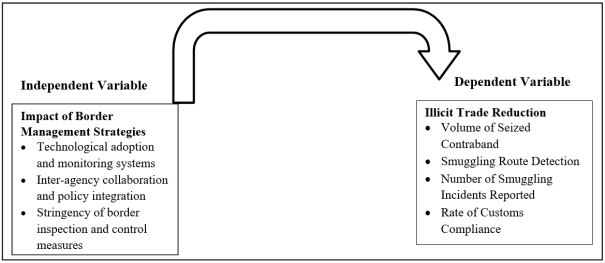
Figure 1. Conceptual Framework Showing Interaction of the Article Variables.
The conceptual framework illustrated the relationship between border management strategies and the reduction of illicit trade at Kenya’s One Stop Border Post (OSBP) in Busia. The framework was divided into two main sections: the independent variable and the dependent variable. The independent variable was the impact of border management strategies. This consisted of three key elements: technological adoption and monitoring systems, inter-agency collaboration and policy integration, and the stringency of border inspection and control measures.
Technological adoption and monitoring systems referred to the integration of advanced technologies such as scanners, biometric tools, and cargo tracking systems to monitor the movement of goods and people across the border. Inter-agency collaboration and policy integration highlighted the cooperation between various government agencies such as customs, police, and immigration to streamline processes and share intelligence in order to combat illicit trade. The third element, the stringency of border inspection and control measures, focused on the thoroughness and frequency of checks at the border post. Stronger border controls, including detailed inspections of goods, vehicles, and individuals, played a crucial role in preventing the flow of illicit goods.
The dependent variable in this framework was illicit trade, which was the outcome that the study aimed to influence and measure based on the implemented border management strategies. Illicit trade was represented by four indicators that reflected its prevalence and the effectiveness of the strategies. The first indicator, the volume of seized contraband, measured the amount of illegal goods intercepted at the border. A higher volume of seized contraband suggested that border control measures were effectively detecting and preventing illicit trade. The second indicator, smuggling route detection, tracked the identification and disruption of unauthorized routes used to bypass formal border controls. An increase in the detection of such routes implied that border management strategies, particularly technological tools, were successful in identifying hidden smuggling channels.
The third indicator, the number of smuggling incidents reported, counted the smuggling cases that were detected and documented at the border. A decrease in these incidents signified a reduction in illicit trade due to effective border strategies. Lastly, the rate of customs compliance reflected the level of adherence to customs regulations by traders and individuals crossing the border. Higher compliance indicated that fewer goods were entering or leaving the country illegally, suggesting that border management measures had become more successful in ensuring that only legally declared goods were allowed entry.
5. Research Design and Methodology
The study utilized a descriptive research design. The target population comprised community members living along the border, law enforcement officers, and relevant government officials such as chiefs and immigration officers, all of whom had valuable information regarding the issue. The population in the border area was approximately 116,000 people, from which 156 respondents were purposively selected to participate in the study. Data collection involved administering a structured questionnaire directly to 156 community residents, allowing for a thorough understanding of local perceptions and experiences concerning illicit trade. In addition, interview schedules were employed to obtain detailed insights from law enforcement officers, chiefs, and immigration officials, with a focus on evaluating the effectiveness of legal frameworks and cross-border cooperation in combating illicit trade.
6. Results/Data Analysis
What factors do you believe contribute most to the prevalence of illicit trade along the Kenya-Uganda border?
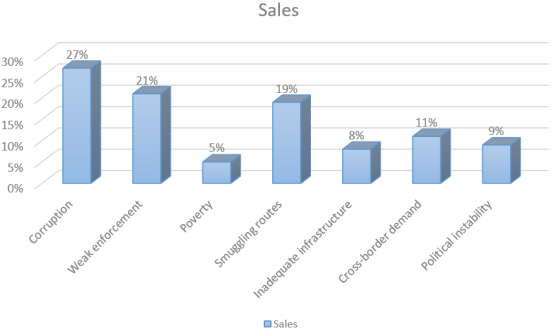
The table provided a breakdown of factors that contributed to the prevalence of illicit trade along the Kenya-Uganda border, based on the responses from 156 participants. The factor with the highest frequency was corruption, which was identified by 42 respondents, accounting for 27% of the total responses. This suggested that corruption was considered the most significant contributor to illicit trade in the region. The second most commonly identified factor was weak enforcement, with 33 respondents (21%) acknowledging it as a key issue. This highlighted the role of insufficient law enforcement in enabling the continuation of illicit trade activities. Smuggling routes emerged as the third most influential factor, identified by 30 respondents (19%), pointing to the critical role of established illicit paths used to transport goods illegally across the border. Cross-border demand was mentioned by 18 respondents (11%), indicating that the demand for certain goods across the border was a major driver of illicit trade. Political instability was cited by 13 respondents (9%), showing that instability in the region could have exacerbated illicit trade by disrupting regulatory and enforcement measures. Inadequate infrastructure was identified by 12 respondents (8%), suggesting that the lack of proper infrastructure, such as roads and border facilities, hindered effective border control and monitoring, thereby facilitating the flow of illicit goods. Finally, poverty was mentioned by 8 respondents (5%), indicating that economic hardship and the lack of alternative livelihoods may have encouraged some individuals to engage in illicit trade. Overall, the table emphasized that corruption and weak enforcement were the primary drivers of illicit trade along the Kenya-Uganda border, while other factors such as inadequate infrastructure and poverty played less significant but still notable roles. The information was presented in
Table 1 and
Figure 2.
Figure 2. Showing factors that contribute most to the prevalence of illicit trade along the Kenya-Uganda border.
Table showing factors that contribute most to the prevalence of illicit trades along the Kenya-Uganda border.
Factor | Frequency | Percentage (%) |
Corruption | 42 | 27 |
Weak enforcement | 33 | 21 |
Poverty | 8 | 5 |
Smuggling routes | 30 | 19 |
Inadequate infrastructure | 12 | 8 |
Cross-border demand | 18 | 11 |
Political instability | 13 | 9 |
Total | 156 | 100 |
Dissemination of the study findings on factors contributing to the prevalence of illicit trade along the Kenya-Uganda border revealed several recurring themes. These themes were derived through a thematic analysis of responses from interviewed law enforcement officers, chiefs, and immigration officials. The findings indicated that corruption, weak enforcement, smuggling routes, and cross-border demand were the most significant drivers of illicit trade in the region. Other contributing factors such as political instability, inadequate infrastructure, and poverty also played roles, albeit to a lesser extent.
Corruption emerged as the dominant theme, consistently highlighted by respondents as a critical enabler of illicit trade. One police officer stated, “Corruption is a deep-rooted problem here. Some officers accept bribes to look the other way, and this undermines all efforts to stop smuggling.” Another respondent, a chief in the border region, remarked, “You’ll find that goods pass through checkpoints easily if the right palms are greased. This is common knowledge here.” These observations highlight how corruption compromises the integrity of border control and allows illicit trade to thrive, often with the involvement of both low-level and high-ranking officials.
Weak enforcement was another prominent theme, with many respondents pointing to insufficient resources and limited manpower as major challenges. An officer from the Rural Border Patrol Unit explained, “We are severely understaffed. Sometimes, we cannot patrol the entire border effectively, which creates gaps that smugglers exploit.” Similarly, an immigration official noted, “We lack the technology and tools to monitor the border properly. Without proper surveillance, it’s impossible to stop all illegal trade.” These responses explain how logistical constraints and inadequate training weaken enforcement capabilities, making it easier for illicit goods to cross the border undetected.
The theme of established smuggling routes also emerged strongly in the analysis. Respondents frequently mentioned the existence of informal pathways that are well-known to smugglers but difficult to police. One border patrol officer explained, “The smugglers know this terrain better than we do. They have been using these routes for years, and some of them are in remote areas we can’t easily access.” A local chief added, “There are routes that have been used for generations, even before borders were formally established. People know how to evade checkpoints.” These insights highlight the strategic advantage smugglers have in navigating and exploiting the physical geography of the border region.
Cross-border demand also featured prominently in the findings. Several respondents noted that the demand for specific goods on either side of the border drives illicit trade. An immigration officer observed, “There’s always a market for cheaper goods, whether it’s counterfeit products, second-hand clothes, or even illegal firearms.” Another respondent, a police officer, stated, “People will always find a way to get what they want, especially when legal channels are too expensive or restrictive.” These perspectives suggest that economic disparities and market dynamics contribute significantly to the persistence of illicit trade.
Political instability and inadequate infrastructure were also mentioned, though less frequently. One respondent noted, “When there is political unrest in neighboring regions, it creates loopholes that smugglers take advantage of. Security forces are often focused on other issues.” Another officer highlighted the role of poor infrastructure, stating, “The roads leading to some border points are in terrible condition, which limits our ability to respond quickly.” Finally, poverty was identified as a driving factor by a few respondents. A chief explained, “Many people here are struggling to make ends meet. They see smuggling as an easy way to earn a living.”
Table 2. There is no statistically significant impact of technological adoption and monitoring systems on Illicit Trade Reduction in Kenya’s One Stop Border Post of Busia.
Area of Study | Technological Adoption and Monitoring Systems | Illicit Trade Reduction | Pearson Correlation Coefficient Value | Sig. (2-tailed) |
Kenya-Uganda Border | | | -.724* | .000 |
In conclusion, the thematic analysis revealed that corruption and weak enforcement were perceived as the primary factors contributing to the prevalence of illicit trade along the Kenya-Uganda border. Established smuggling routes and cross-border demand further exacerbated the problem, while political instability, inadequate infrastructure, and poverty acted as additional, though secondary, drivers.
The following questions and hypotheses were answered and tested respectively:
Pearson’s Correlation Coefficient (r) between technological adoption and monitoring systems was found to be -0.724, with a significance level of 0.000, which was less than the threshold of 0.05. This indicated a statistically significant relationship between technological adoption and monitoring systems and the reduction of illicit trade in Kenya. The coefficient represented a strong negative correlation, implying that an increase in technological adoption and monitoring systems was associated with a decrease in illicit trade. Consequently, the null hypothesis was rejected.
Table 3. There is no statistically significant impact of inter-agency collaboration and policy integration on Illicit Trade Reduction in Kenya’s One Stop Border Post of Busia.
Area of Study | Inter-agency Collaboration and Policy Integration | Illicit Trade Reduction | Pearson Correlation Coefficient Value | Sig. (2-tailed) |
Kenya-Uganda Border | | | -.653* | .001 |
Pearson’s Correlation Coefficient (r) between inter-agency collaboration and policy integration and the reduction of illicit trade was -0.653, with a significance level of 0.001, which was below the 0.05 threshold. This indicated a statistically significant relationship between inter-agency collaboration and policy integration and the reduction of illicit trade in Kenya. The coefficient reflected a strong negative correlation, suggesting that an increase in inter-agency collaboration and policy integration was associated with a decrease in illicit trade. Therefore, the null hypothesis was rejected.
Table 4. There is no statistically significant impact of stringency of border inspection and control measures on Illicit Trade Reduction in Kenya’s One Stop Border Post of Busia.
Area of Study | Stringency of Border Inspection and Control Measures | Illicit Trade Reduction | Pearson Correlation Coefficient Value | Sig. (2-tailed) |
Kenya-Uganda Border | | | -.691* | .001 |
Pearson’s Correlation Coefficient (r) between the stringency of border inspection and control measures and the reduction of illicit trade was -0.691, with a significance level of 0.001, which was below the 0.05 threshold. This indicated a statistically significant relationship between stringent border inspection and control measures and the reduction of illicit trade in Kenya. The coefficient demonstrated a strong negative correlation, suggesting that an increase in the stringency of inspection and control measures was associated with a corresponding decrease in illicit trade. Consequently, the null hypothesis was rejected.
7. Discussion of Findings
The issue of illicit trade along the Kenya-Uganda border has garnered considerable academic interest, with numerous scholars examining the factors contributing to its persistence and the possible solutions. The current study builds on this discourse by highlighting corruption, weak enforcement, smuggling routes, and cross-border demand as the most significant contributors to illicit trade in the region. Other factors such as political instability, inadequate infrastructure, and poverty also emerged, though to a lesser extent.
One of the most notable findings is that corruption was identified by 27% of respondents as the primary driver of illicit trade. This finding is consistent with the work of
| [8] | Baker, P., Berry, M., Czitrom, D., Hahn, B., Kloppenberg, J., Lamoreaux, N., & Witwer, D. (2019). Interchange: Corruption has a history. Journal of American History, 105(4), 912-938. https://academic.oup.com/jah/article-abstract/105/4/912/5352872 |
[8]
, who argued that corruption within border management institutions undermines the enforcement of customs regulations, thereby facilitating illegal trade. Similarly,
emphasized that corrupt practices at border points lead to inadequate inspections and reduced compliance with trade laws. While both scholars highlight the systemic nature of corruption within state institutions, the current study adds a localized perspective by linking corruption to specific actors, such as customs officials and local authorities.
Weak enforcement was cited by 21% of respondents, reinforcing findings by
, who contend that limited institutional capacity, lack of resources, and insufficient political will hinder efforts to address illegal trade. These scholars argue that enforcement gaps enable illicit trade to thrive. While the current study aligns with this view, it also acknowledges the potential of technological innovations and inter-agency collaboration, as proposed by
, to strengthen enforcement mechanisms, an aspect supported by the study’s later findings on technology adoption.
Smuggling routes, identified by 19% of respondents, were also emphasized as critical enablers of illicit trade. This supports the work of
| [12] | Karaçay, A. B. (2017). Shifting human smuggling routes along Turkey’s borders. Turkish Policy Quarterly, 15(4), 97-108. |
[12]
, who noted that the geography of border regions and the presence of entrenched smuggling networks present substantial challenges to enforcement. Likewise,
argue that improved intelligence sharing and monitoring technologies can disrupt these routes. The current study supports this claim through the observed negative correlation between technological adoption and illicit trade, indicating the potential of surveillance tools to counter smuggling.
Cross-border demand, cited by 11% of respondents, corresponds with the findings of
| [14] | Arndt, S., Madrid Akpovo, S., Tesar, M., Han, T., Huang, F., & Halladay, M. (2021). Collaborative online learning across borders (COLAB): Examining intercultural understandings of preservice teachers in a virtual cross-cultural university-based program. Journal of Research in Childhood Education, 35(2), 281-296. https://www.tandfonline.com/doi/abs/10.1080/02568543.2021.1880994 |
[14]
, who identified consumer demand for illicit goods such as drugs, weapons, and counterfeit products as a major factor driving cross-border smuggling. However, while Arndt focuses on demand-side dynamics, the current study places more emphasis on supply-side factors such as governance and enforcement. This contrast suggests that demand plays a secondary role in the Kenya-Uganda context but remains an important consideration in holistic policy approaches.
Political instability, mentioned by 9% of participants, was found to contribute to weakened governance and regulatory enforcement, consistent with the findings of
| [15] | Moyo, I., & Nshimbi, C. C. (Eds.). (2019). African borders, conflict, regional and continental integration. Abingdon: Routledge. |
[15]
. These authors argue that instability disrupts law enforcement and enables illicit trade networks to expand.
| [16] | Byrne, C., Randall, N., & Theakston, K. (2020). Disjunctive prime ministerial leadership in British politics: From Baldwin to Brexit. Houndmills: Palgrave Macmillan. |
[16]
offer a complementary perspective by linking the rise of non-state actors in unstable regions to increased illicit activity, a dynamic not directly explored in the current study but worthy of future research.
Inadequate infrastructure and poverty, identified by 8% and 5% of respondents respectively, were viewed as less significant but still notable contributors. These findings align with
| [17] | Krylova, Y. (Ed.). (2024). Hubs of Illicit Trade in the Global Economy. Taylor & Francis. |
[17]
, who suggest that while economic and infrastructural challenges do influence illicit trade, they are subordinate to governance and institutional failures. However,
argue that infrastructural improvements particularly in transportation and communication can enhance the efficacy of border control. This view is partially supported by the study’s findings on technological adoption, indicating that infrastructure and technology can jointly improve border security outcomes.
Regarding border management strategies, the study revealed a strong negative correlation between technological adoption and illicit trade (r = -0.724), indicating that technological interventions play a critical role in curbing illegal trade. This aligns with
| [19] | Smith, M. J., Ray, S. B., Raymond, A., Sienna, M., & Lilly, M. B. (2018). Long-term lessons on the effects of post-9/11 border thickening on cross-border trade between Canada and the United States: A systematic review. Transport Policy, 72, 198-207. https://www.sciencedirect.com/science/article/abs/pii/S0967070X17306959 |
[19]
, who demonstrated that automated customs systems and digital surveillance tools significantly reduce the flow of illicit goods by modernizing border control mechanisms.
The study also found a statistically significant relationship between inter-agency collaboration and the reduction of illicit trade (r = -0.653). These supports
| [20] | Nzioka, P. S. (2021). National security implications of human trafficking and migrant smuggling in Kenya (2009-2019) (Doctoral dissertation, Strathmore University). |
[20]
, who emphasizes the importance of policy coordination and shared information systems among border agencies including customs, immigration, and security personnel in enhancing enforcement capacity.
Finally, the stringency of border inspection and control measures was also found to have a strong negative correlation with illicit trade (r = -0.691).
In summary, while there is broad consensus in existing literature regarding the key drivers of illicit trade, this study contributes to a more localized and practical understanding of the dynamics at play along the Kenya-Uganda border. The findings reaffirm the dominant role of corruption and weak enforcement while emphasizing the effectiveness of technological adoption, inter-agency collaboration, and strict inspection protocols in reducing illicit trade. Although political instability, infrastructure, and poverty play secondary roles, they remain important in shaping a comprehensive response. The study thus underscores the need for a multifaceted and coordinated border management approach to effectively address the persistent issue of illicit trade in the region.
8. Conclusions
a) Corruption and insufficient enforcement mechanisms are the leading contributors to the prevalence of illicit trade, undermining border security and regulatory compliance.
b) The persistence of well-established smuggling routes facilitates the seamless movement of illicit goods, making enforcement efforts challenging.
c) A lack of adequate technology and poor collaboration among agencies contribute significantly to the persistence of illicit trade along the border.
d) Factors such as cross-border demand, poverty, and political instability exacerbate illicit trade by creating opportunities and motivations for smuggling activities.
9. Recommendations
a) Implement stringent anti-corruption measures, including regular audits, ethical training, and the establishment of accountability frameworks for law enforcement and border officials.
b) Increase staffing, provide better equipment, and offer targeted training to enforcement personnel to close gaps in border control.
c) Invest in and deploy modern surveillance and monitoring technologies to disrupt smuggling networks and improve the efficiency of border inspections.
d) Strengthen inter-agency coordination and policy integration to ensure a unified approach to combating illicit trade, supported by shared intelligence and resources.
Abbreviations
CBP | Customs and Border Protection |
ICMS | Integrated Customs Management System |
OSBPs | One-stop Border Posts |
RECTS | Regional Electronic Cargo Tracking System |
SADC | Southern African Development Community |
Author Contributions
Kennedy Obumba Ogutu is the sole author. The author read and approved the final manuscript.
Conflicts of Interest
The author declares no conflicts of interest.
References
| [1] |
Andreas, P. (2021). The illicit trade and conflict connection: Insight from US history. In The Routledge Handbook of Smuggling (pp. 355-368). Routledge.
https://scholar.google.com/scholar?hl=en&as_sdt=0%2C5&q=Andreas%2C+P.+%282021%29.+The+illicit+trade+and+conflict+connection%3A+Insight+from+US+history.+In+The+Routledge+Handbook+of+Smuggling+%28pp.+355-368%29.+Routledge.&btnG=
|
| [2] |
Von Lampe, K., Kurti, M., & Bae, J. (2014). Land of opportunities: the illicit trade in cigarettes in the United States. Corruption, Greed and Crime-Money: Sleaze and Shady Economy in Europe and Beyond. Oisterwijk, The Netherlands: Wolf Legal Publishers, 267-289.
|
| [3] |
van der Zee, K., van Walbeek, C., & Magadla, S. (2020). Illicit/cheap cigarettes in South Africa. Trends in organized crime, 23(3), 242-262.
https://link.springer.com/article/10.1007/s12117-019-09372-9
|
| [4] |
Shelley, L. I. (2018). Corruption & illicit trade. Daedalus, 147(3), 127-143.
https://direct.mit.edu/daed/article/147/3/127/27202/Corruption-amp-Illicit-Trade
|
| [5] |
Chirchietti, N. (2017). The role of Innovation Hubs taking start-ups from idea to business: The case of Nairobi, Kenya.
https://pub.h-brs.de/frontdoor/index/index/docId/3362
|
| [6] |
Nugent, P., & Soi, I. (2020). One-stop border posts in East Africa: State encounters of the fourth kind. Journal of Eastern African Studies, 14(3), 433-454.
https://www.tandfonline.com/doi/full/10.1080/17531055.2020.1768468
|
| [7] |
Tyson, J. E. (2018). One-stop border posts and informal livelihoods in Busia, Kenya. Development in Practice, 28(4), 562-573.
https://www.tandfonline.com/doi/abs/10.1080/09614524.2018.1442813
|
| [8] |
Baker, P., Berry, M., Czitrom, D., Hahn, B., Kloppenberg, J., Lamoreaux, N., & Witwer, D. (2019). Interchange: Corruption has a history. Journal of American History, 105(4), 912-938.
https://academic.oup.com/jah/article-abstract/105/4/912/5352872
|
| [9] |
De Waal, E. & Serfontein, E. (2015). The corruption bogey in South Africa: Is public education safe? South African Journal of Education, 35(1), 1-12.
https://journals.co.za/doi/abs/10.10520/EJC167018
|
| [10] |
Kim, D., & Tajima, Y. (2022). Smuggling and border enforcement. International Organization, 76(4), 830-867.
https://www.cambridge.org/core/journals/international-organization/article/smuggling-and-border-enforcement/1A197DF22C69535657079CB8EA5044DA
|
| [11] |
Chen, X., Chris, H. C. C., Tsang, A., & Xiang, Y. (2022). Cross-border enforcement of securities laws and dividend payouts. The British Accounting Review, 54(6), 101117.
https://www.sciencedirect.com/science/article/abs/pii/S0890838922000464
|
| [12] |
Karaçay, A. B. (2017). Shifting human smuggling routes along Turkey’s borders. Turkish Policy Quarterly, 15(4), 97-108.
|
| [13] |
Diba, P., Papanicolaou, G., & Antonopoulos, G. A. (2019). The digital routes of human smuggling? Evidence from the UK. Crime prevention and community safety, 21, 159-175.
https://link.springer.com/article/10.1057/s41300-019-00060-y
|
| [14] |
Arndt, S., Madrid Akpovo, S., Tesar, M., Han, T., Huang, F., & Halladay, M. (2021). Collaborative online learning across borders (COLAB): Examining intercultural understandings of preservice teachers in a virtual cross-cultural university-based program. Journal of Research in Childhood Education, 35(2), 281-296.
https://www.tandfonline.com/doi/abs/10.1080/02568543.2021.1880994
|
| [15] |
Moyo, I., & Nshimbi, C. C. (Eds.). (2019). African borders, conflict, regional and continental integration. Abingdon: Routledge.
|
| [16] |
Byrne, C., Randall, N., & Theakston, K. (2020). Disjunctive prime ministerial leadership in British politics: From Baldwin to Brexit. Houndmills: Palgrave Macmillan.
|
| [17] |
Krylova, Y. (Ed.). (2024). Hubs of Illicit Trade in the Global Economy. Taylor & Francis.
|
| [18] |
Gambo, J. O., Sola, P., & Ingram, V. (2022). Institutional and Governance Arrangements Shaping Kenya-Uganda Cross-Border Trade in Charcoal. Available at SSRN 4236030.
https://papers.ssrn.com/sol3/papers.cfm?abstract_id=4236030
|
| [19] |
Smith, M. J., Ray, S. B., Raymond, A., Sienna, M., & Lilly, M. B. (2018). Long-term lessons on the effects of post-9/11 border thickening on cross-border trade between Canada and the United States: A systematic review. Transport Policy, 72, 198-207.
https://www.sciencedirect.com/science/article/abs/pii/S0967070X17306959
|
| [20] |
Nzioka, P. S. (2021). National security implications of human trafficking and migrant smuggling in Kenya (2009-2019) (Doctoral dissertation, Strathmore University).
|
Cite This Article
-
ACS Style
Ogutu, K. O. The Impact of Border Management Strategies on the Reduction of Illicit Trade at Kenya’s Busia One Stop Border Post. J. Public Policy Adm. 2025, 9(3), 144-152. doi: 10.11648/j.jppa.20250903.13
 Copy
|
Copy
|
 Download
AMA Style
Ogutu KO. The Impact of Border Management Strategies on the Reduction of Illicit Trade at Kenya’s Busia One Stop Border Post. J Public Policy Adm. 2025;9(3):144-152. doi: 10.11648/j.jppa.20250903.13
Copy
|
Download
-
@article{10.11648/j.jppa.20250903.13,
  author = {Kennedy Obumba Ogutu},
  title = {The Impact of Border Management Strategies on the Reduction of Illicit Trade at Kenya’s Busia One Stop Border Post
},
  journal = {Journal of Public Policy and Administration},
  volume = {9},
  number = {3},
  pages = {144-152},
  doi = {10.11648/j.jppa.20250903.13},
  url = {https://doi.org/10.11648/j.jppa.20250903.13},
  eprint = {https://article.sciencepublishinggroup.com/pdf/10.11648.j.jppa.20250903.13},
  abstract = {This study evaluated the impact of border management strategies on illicit trade reduction in Kenya’s one stop border post of Busia. A descriptive research design was used. The target population comprised community members living along the border, law enforcement officers, and relevant government officials such as chiefs and immigration officers, all of whom had valuable information regarding the issue. Purposive sampling was used to select the residents along Kenya-Uganda border and they were 156 in total. Purposive sampling was also used to select law enforcement officers, chiefs, and immigration officials. The questionnaire used was researcher-administered. A structured questionnaire was used to obtain information from the residents while interview schedule guides were used to obtain information from law enforcement officers, chiefs, and immigration officials. Hypotheses were tested using Pearson’s Correlation Coefficient (r) at α =0.05 level of significance. The results obtained from Kenya’s one stop border post of Busia revealed that corruption and weak enforcement mechanisms were the primary factors driving illicit trade along the Kenya-Uganda border. Smuggling routes also played a significant role, facilitating the illegal movement of goods. Additional contributors include cross-border demand, political instability, inadequate infrastructure, and poverty, each exacerbating the problem to varying degrees. Statistical analysis showed the critical role of technological adoption, inter-agency collaboration, and stringent border control measures in mitigating illicit trade. Pearson’s Correlation Coefficients demonstrated strong negative correlations between these variables and illicit trade prevalence, indicating that increased adoption of technology, enhanced inter-agency cooperation, and stricter border inspections significantly reduced illicit trade. Recommendations included implementing robust anti-corruption measures, equipping and training border officials, investing in advanced surveillance technologies, and fostering inter-agency coordination with integrated policies to ensure a comprehensive and unified approach to combating illicit trade.},
 year = {2025}
}
Copy
|
Download
-
TY  - JOUR
T1  - The Impact of Border Management Strategies on the Reduction of Illicit Trade at Kenya’s Busia One Stop Border Post

AU  - Kennedy Obumba Ogutu
Y1  - 2025/07/30
PY  - 2025
N1  - https://doi.org/10.11648/j.jppa.20250903.13
DO  - 10.11648/j.jppa.20250903.13
T2  - Journal of Public Policy and Administration
JF  - Journal of Public Policy and Administration
JO  - Journal of Public Policy and Administration
SP  - 144
EP  - 152
PB  - Science Publishing Group
SN  - 2640-2696
UR  - https://doi.org/10.11648/j.jppa.20250903.13
AB  - This study evaluated the impact of border management strategies on illicit trade reduction in Kenya’s one stop border post of Busia. A descriptive research design was used. The target population comprised community members living along the border, law enforcement officers, and relevant government officials such as chiefs and immigration officers, all of whom had valuable information regarding the issue. Purposive sampling was used to select the residents along Kenya-Uganda border and they were 156 in total. Purposive sampling was also used to select law enforcement officers, chiefs, and immigration officials. The questionnaire used was researcher-administered. A structured questionnaire was used to obtain information from the residents while interview schedule guides were used to obtain information from law enforcement officers, chiefs, and immigration officials. Hypotheses were tested using Pearson’s Correlation Coefficient (r) at α =0.05 level of significance. The results obtained from Kenya’s one stop border post of Busia revealed that corruption and weak enforcement mechanisms were the primary factors driving illicit trade along the Kenya-Uganda border. Smuggling routes also played a significant role, facilitating the illegal movement of goods. Additional contributors include cross-border demand, political instability, inadequate infrastructure, and poverty, each exacerbating the problem to varying degrees. Statistical analysis showed the critical role of technological adoption, inter-agency collaboration, and stringent border control measures in mitigating illicit trade. Pearson’s Correlation Coefficients demonstrated strong negative correlations between these variables and illicit trade prevalence, indicating that increased adoption of technology, enhanced inter-agency cooperation, and stricter border inspections significantly reduced illicit trade. Recommendations included implementing robust anti-corruption measures, equipping and training border officials, investing in advanced surveillance technologies, and fostering inter-agency coordination with integrated policies to ensure a comprehensive and unified approach to combating illicit trade.
VL  - 9
IS  - 3
ER  -
Copy
|
Download





 Share This Article
 Twitter
 Linked In
 Facebook